
Studies on Bacillus thuringiensis insecticidal protein and its' mode of action to generate new category, “Proteinaceous Insecticide”.

Research members: Dr. Ryoichi Sato
Research fields: Boundary agriculture, Biological Science, Environmental conservation
Departments: Institute of Agriculture
Keywords: Cry toxin, insecticidal protein, Bacillus thuringiensis, insecticide, gene modified food
Web site:
Summary
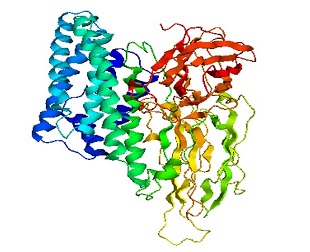

We are attempting to solve the problems of pesticide which has influence to both environment and foods through the study of insecticidal protein from Bacillus thuringiensis. First, we will analyze mode of action of the insecticidal protein which is safe both to environment and human being. Second, we will make clear and recognize the actual result of evolution in both insecticidal protein and its receptors of insects. Third, we will try to construct insecticidal protein improving method using procedures of directed evolution which have been already constructed. From these, new category of insecticide, “proteinaceous insecticide” will be generated in Japan. Furthermore, insect pest resistant GM foods-generating transgenes for the exportation to foreign countries will be obtained.
Reference articles and patents
1. Haruka Endo, Yuki Kobayashi, Yasushi Hoshino, Shiho Tanaka, Shingo Kikuta,
Hiroko Tabunoki & Ryoichi Sato Affinity maturation of Cry1Aa toxin to the Bombyx mori cadherin-like receptor by directed evolution based on phage display and biopanning selections of domain II loop 2 mutant toxins. MicrobiologyOpen 3(4):568-77 (2014).
2. Fujii Y, Tanaka S, Otsuki M, Hoshino Y, Endo H, Sato R. Affinity Maturation of Cry1Aa Toxin to the Bombyx mori Cadherin-Like Receptor by Directed Evolution. Mol Biotechnol. 54(3):888-99 (2013).
3. Tanaka, S, Miyamoto, K, Noda, H, Jurat-Fuentes, JL, Yoshizawa, Y, Endo, H, Sato, R. The ATP-binding cassette transporter subfamily C member 2 in Bombyx mori larvae is a functional receptor for Cry toxins from Bacillus thuringiensis. The FEBS J. 280(8):1782-94 (2013).
4. Tanaka S, Yoshizawa Y and Sato R. Response of midgut epithelial cells to Cry1Aa is toxin-dependent and depends on the interplay between toxic action and the host apoptotic response The FEBS J 279(6), 1071-1079 (2012)
5. Yuki Fujii, Shiho Tanaka, Manami Otsuki, Yasushi Hoshino, Chinatsu Morimoto, Takuya Kotani, Yuko Harashima, Haruka Endo, Yasutaka Yoshizawa, and Ryoichi Sato Cry1Aa binding to the cadherin receptor does not require conserved amino acid sequences in the domain II loops Bioscience Reports 33(1):103-12 (2012)
6. Bacillus thuringiensis Cry Toxins Bound Specifically to Various Proteins via Domain III, Which Had a Galactose-Binding Domain-Like Fold. Kitami, M., Kadotani, T., Nakanishi, K., Atsumi, S., Higurashi, S., Ishizaka, T., Watanabe, A., Sato, R. Biosci Biotechnol Biochem, 査読有, 75, 305-312 (2011)
Contact
University Research Administration Center(URAC),
Tokyo University of Agriculture andTechnology
urac[at]ml.tuat.ac.jp
(Please replace [at] with @.)